IB Physics SpaceTime Diagram
/A tutorial sheet of true-false questions on the spacetime diagram is given below.
ɣ=1/√(1-v2/c2)
- Albert Einstein was not the first person to use a spacetime diagram.
- The path of a particle in the (x,ct) plane on a spacetime diagram is called its world line.
- A rigid rod is at rest in the S frame. At t=0 the spacetime coordinates of the ends of the rod in S are A=(0,0) and B=(L0,0). The worldlines of A and B have the equations x=0 and x=L0 respectively.
- In question 3 take ɣ = 5/4 and L0 as 2. Using a spacetime diagram the coordinates of A in S' when ct' = 4 are (-2.5,4) and the coordinates of B are (-0.83,4), the length of the rod in S' being 1.7 approximately.
- A rigid rod is at rest in the S' frame. At t'=0 the spacetime coordinates of the ends of the rod in S' are P=(0,0) and Q=(L0,0). The worldlines of P and Q have the equations x=0 and x=L0 respectively.
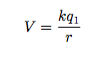 . Enter the sign of the charge when substituting for q.
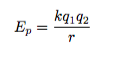 . Enter the sign of each charge when substituting for q. Negative potential energy means the charges attract and positive work must be done to separate the system to a state where the charges do not influence each other.
 . Enter the sign of the source charge when substituting for q. A negative field value means towards the source charge, a positive value means away.

 , where f' is the frequency measured by the observer, f is the frequency of the sound waves emitted by the source, v is the speed of sound and vo and vs are the velocities of the observer and source respectively. Note: Draw the arrow from the observer to the source. This is the positive direction for choosing the signs of the velocity vectors, vo and vs
 where the negative sign indicates that the heat flow ∆Q is from the high temperature end to the lower temperature end and the change in temperature ∆T is the final temperature minus the initial temperature. The thermal conductivity of the material is k, the cross sectional area that the heat flows through in a time ∆t is A and ∆x is the distance between the end points.